
Maybees
+ a recipe for Rhubarb and Rose Choux pastry with Honey Whipped Cream

Even though I’m a city person, there are many things I have learned, and still am learning, from spending time in the French countryside. Most importantly for me, they revolve around food and agriculture. Being close to the fields, having friends who are farmers and beekeepers, I have come to witness how hard these people work as well as how difficult it is to produce food of high quality, while still respecting the environment, the animals, and the rhythm of nature itself.
With our friends, we farm on a very small scale, growing our own vegetables and edible flowers, rearing animals, and, for the first time this year: producing honey. Last year, our friends made a couple of hives and, at just the right moment, a couple of bee swarms passed through the property looking for shelter. Somehow, everything aligned, and the bees eventually settled in the garden.
Last spring when we were planning what to plant, we dedicated part of the garden to a variety of flowers so the bees would have access to pollen throughout the season and a diversity of blooms. It was beautiful to witness how naturally everything worked together. We and the bees, all slowly adapted ourselves to this tiny new ecosystem.
Over the months, we learned how much patience beekeeping requires. Even though I was not directly involved, I observed my friends closely. Watching the hives became part of the daily life here, observing the bees leaving their dwelling and returning full of pollen, and listening to the constant hum around the garden.
Last week, came the moment of extracting the honey. The friends removed the frames that the bees had filled over the seasons. The frames were beautiful with different colors hues. I learned that bees do not necessarily fill a frame all at once from a single nectar source. Over days or weeks, they collect nectar from different flowers as various plants bloom. For example, nectar from chestnut trees, wildflowers, black locusts, or canola, can all produce different shades ranging from an almost transparent gold to a deep amber. As a result, one frame can contain sections of lighter and darker honey side by side. Carefully, they extracted the combs, and the golden honey began to flow out. As we tasted the honey, we were trying to find the trace of all the flowers, herbs, and trees surrounding the garden. It truly felt good to consume the honey that has been made where we live, with the flowers we planted for them and those that nature offered.
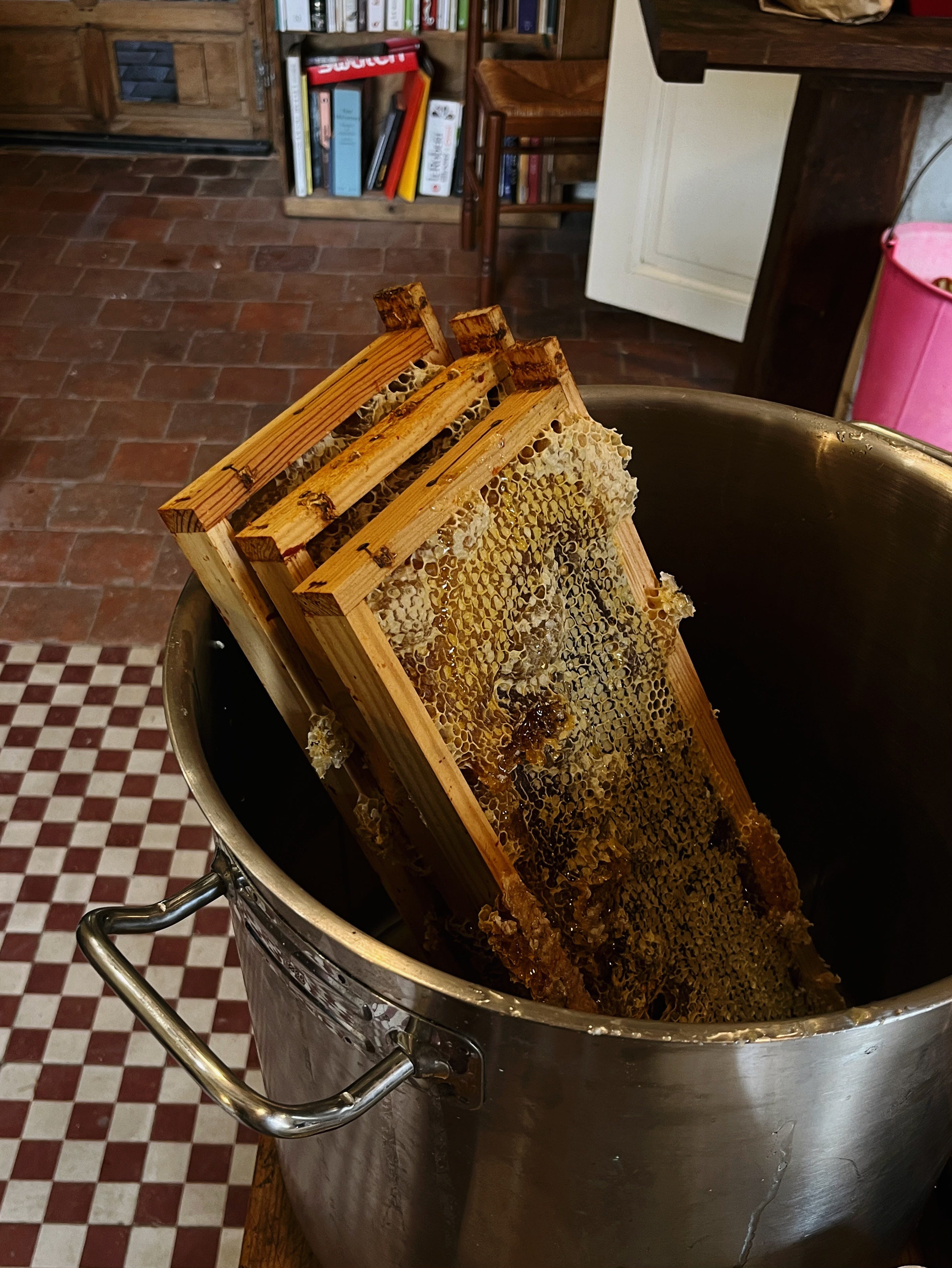
When I asked the friends to keep a piece of honeycomb for me, I instantly remembered that one of my mom’s favorite breakfasts is Iranian-style clotted cream or Sarshir or Kaymak, topped with honey and its honeycomb. Since the season of rhubarb has arrived, I decided to make some choux pastry, fill them with honey-sweetened cream and some rhubarb compote for this week’s newsletter.
I hope you enjoy the recipe.
The Recipe
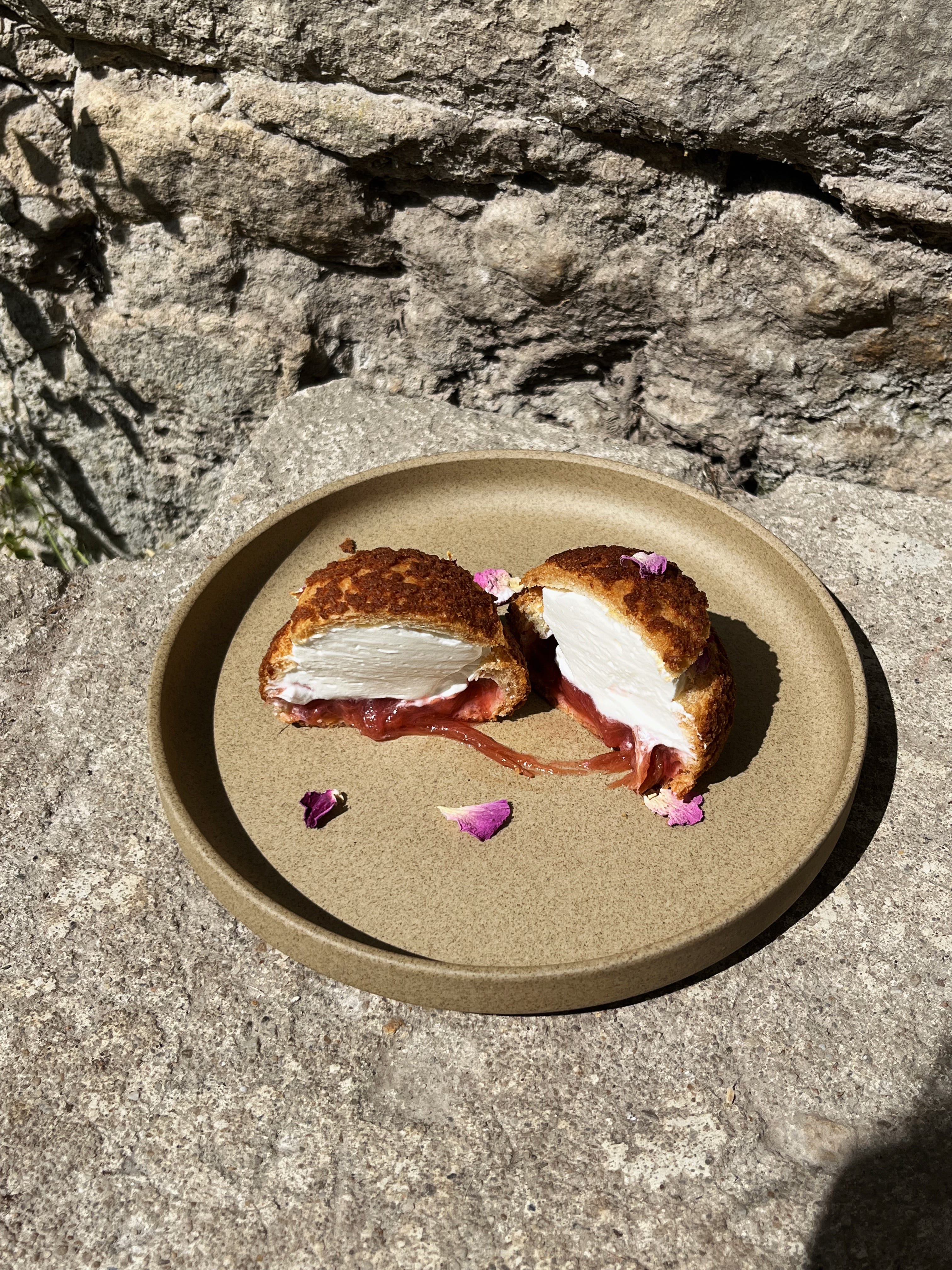
Rhubarb and Rose Choux pastry with Honey Whipped Cream
-
Ingredients
For the choux pastry
60 grams water
50 grams milk
50 grams unsalted butter
75 grams all-purpose flour
8 grams sugar
2–3 eggs, room temperature
2 grams salt
-
For the craquelin
45 grams unsalted butter
45 grams all-purpose flour
45 grams light brown sugar
-
For the rhubarb compote
400 grams rhubarb, cut into 1 cm pieces
65 grams water
75 grams sugar
1 tbsp rose water
-
For the filling
200 grams double cream (minimum 45% fat)
25 grams Runny Honey
-
This recipe will give you 16 generous choux buns
-
Method
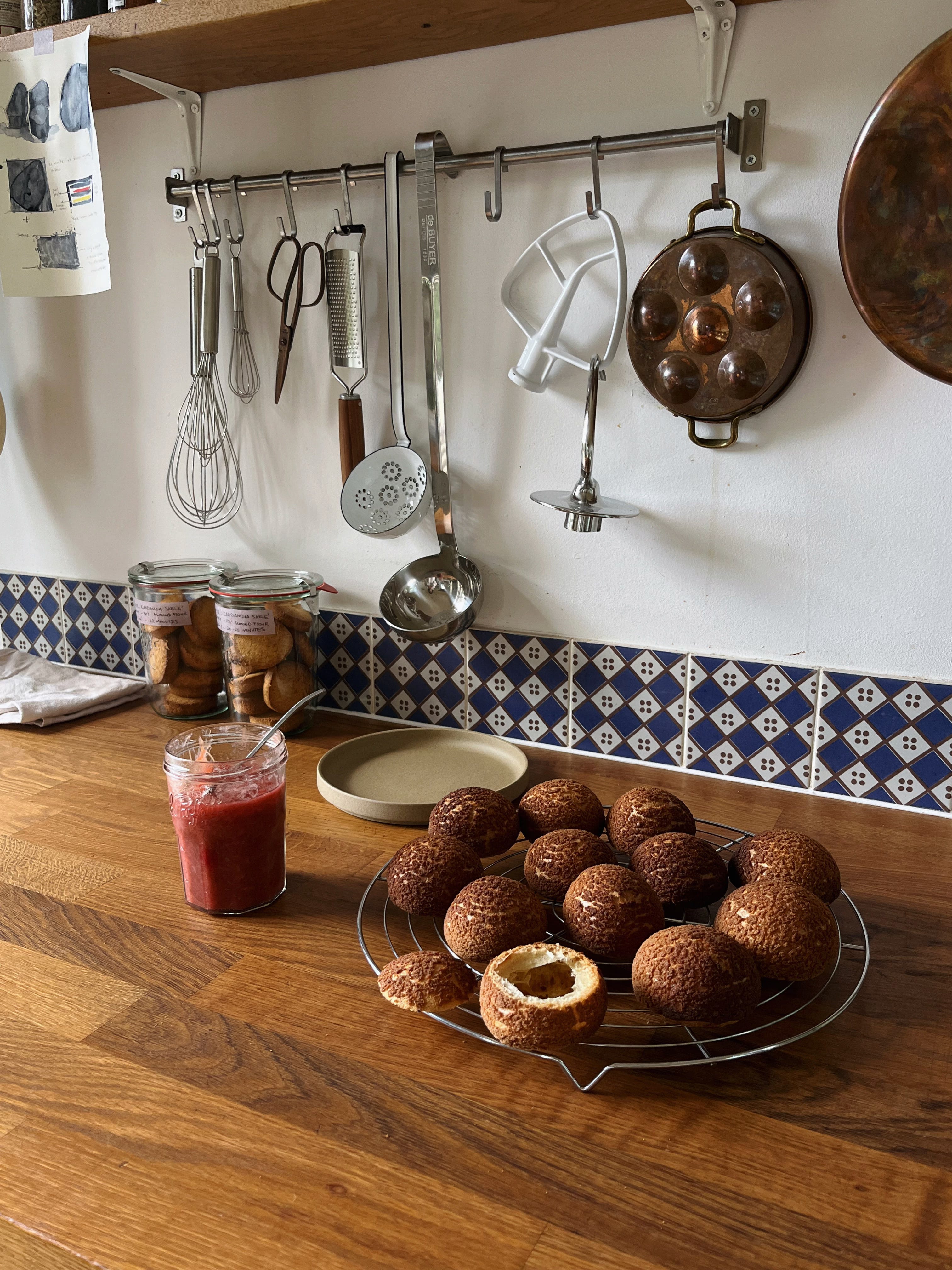
To make the compote, put the rhubarb, sugar, and water into a heavy saucepan. Stir enough so everything looks evenly coated, then leave it for a few minutes while the sugar starts pulling juice from the fruit.
Place over medium heat. Once it begins to simmer, lower the heat. Let it cook gently for about 10–15 minutes. Stir occasionally until the rhubarb soften, break down, and turn into something between chunks and jam. If it looks too dry at any point, add a small splash of water. If it looks too loose, just keep simmering. It will thicken slightly as it cools anyway.
When the texture feels right, remove from the heat and add the rose water. Let it sit while you prepare the rest of the recipe.
Preheat the oven to 220°C (200°C fan-forced). Prepare a tray and line the bottom with parchment paper, then set aside.
To make the craquelin, mix the butter with sugar until combined. There is no need to aerate it. Add the flour until it forms a dough. Roll out the dough into 2-3 mm thickness and use a round 5 cm cutter to cut the dough. Store the craquelin in the fridge as you prepare the rest.
To make the choux pastry, heat the water, milk, butter, and sugar in a pan until the butter is fully melted and the mixture starts to boil. Add the flour immediately and stir with a spatula until a thick dough forms. Keep stirring for a couple of minutes or until a thin film forms at the bottom of the pan. If you have a thermometer, the temperature of the dough should be around 75°C.
Transfer the dough to the bowl of a stand mixer fitted with a paddle attachment andmix the dough until it cools down slightly. Meanwhile, break the eggs into a small bowl, add the salt, and mix until just combined. Slowly stream the egg mixture intothe dough (add little by little) and keep mixing until the batter becomes shiny and forms a V shape when you lift the paddle attachment.
Transfer the dough to a piping bag and pipe the dough onto the prepared tray, leaving at least 2–3 cm between each choux as they will expand. Place the craquelin on top of each choux.
Bake for 15 minutes, then reduce the oven temperature to 175°C (fan-forced) and bake for another 15-20 minutes or until the choux pastries are golden brown. Set aside to cool while you prepare the filling.
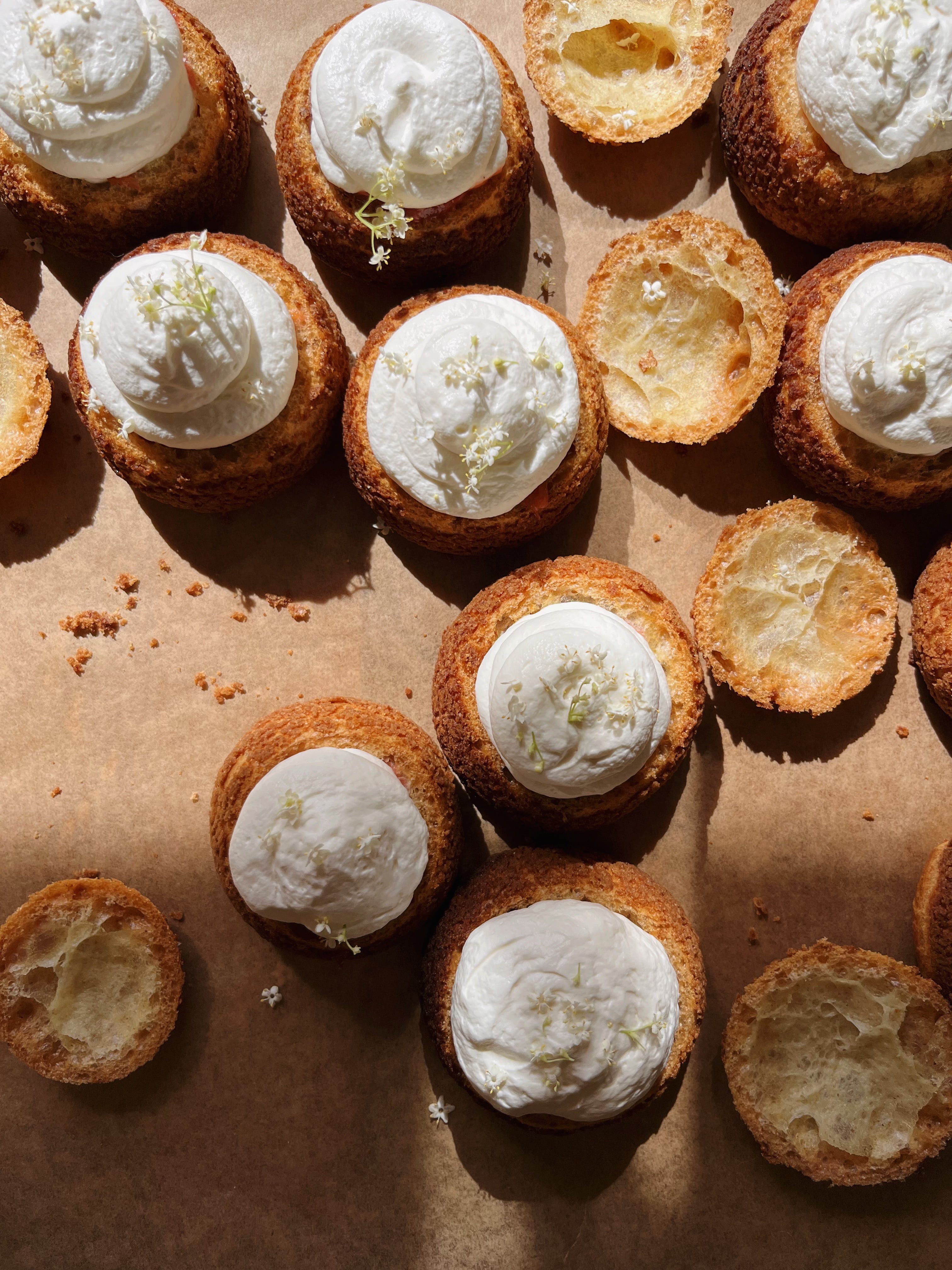
For the filling, whip the cream, and honey until medium-stiff peaks form. Cut the top of the choux pastries, add a spoonful of rhubarb compote, and pipe the honey whipped cream on top. Decorate with your favorite edible flowers and serve immediately.
Noosh-e-Jaan, may it nourish your soul. x
-
I would love to keep writing without a paywall, but writing and developing recipes take time and financial resources. If you enjoy my recipes/posts please consider buying me a coffee. It will make my day. x
goûter, partager. is a reader-supported publication. To receive new posts and support my work, consider becoming a free or paid subscriber.